Tuesday, February 8, 2011

PAUL REED EXHIBITIONS AND PANEL IN WASHINGTON, D.C.

PAUL REED EXHIBITIONS AND PANEL IN WASHINGTON, D.C.
Reed at Corcoran
Paul Reed, In And Out B, 1969, acrylic on canvas, on view at the Corcoran Gallery of Art as part of the exhibition Washington Color And LightTo the right is a painting by Howard Mehring; to 

the left in the next gallery, two works by Gene Davis.


     The work of Paul Reed is currently on view in three exhibitions in the Washington, D.C., area. The Washington Color Field great is included in Washington Color and Light, an exhibition at the Corcoran Gallery of Art of artists associated with the Washington Color School and their contemporaries. Others in the exhibition include Kenneth Noland, Morris Louis, Sam Gilliam, Gene Davis, Alma Thomas and Anne Truitt. The exhibition is on view through March 6 and will re-open June 25 - August 14, 2011. For more information about the Corcoran exhibition, click here.

    A large overview of 92-year-old Reed's work from the 1950s through the present opened last week at the Workhouse Art Center in Lorton, Va. The exhibition, Ultraviolet to Infrared: Paul Reed - 50 Years,will be on view through February 27. Lorton is just south-west of Washington, D.C., off Interstate 95. For more information about the Lorton exhibition, click here.


     Simultaneously, Georgetown University in Washington, D.C., is presenting another overview of Reed's work. The exhibition of mostly small works, including paintings, works on paper, silkscreens, photo montages and sculpture, is at the university's library. Evolution Through Color: The Art of Paul Reed, runs through March 18, 2011.
     The Georgetown exhibition was accompanied by a panel discussion about Reed's work and career. The panel, on January 12, included David Gariff, senior lecturer at the National Gallery of Art in D.C.; legendary silkscreen printer Lou Stovall, who printed most of Reed's silkscreens; Georgetown art & art history professor emeritus Cliff Chieffo; Georgetown liberal studies PhD candidate Joy Chambers; and if ART Gallery owner Wim Roefs. For more information and images of works in the Georgetown exhibition, click here.
     Catalogues of the Georgetown exhibition are available at if ART Gallery. if ART Gallery soon also will add several paintings and silkscreens by Reed from the 1960s and 1970s to its inventory. Stay tuned
    For works by Paul Reed at if ART Gallery, click here
Reed Holding Disc Painting Jan 2011  
Paul Reed holding one of his 1965 Disc paintings in his
backyard in Arlington, Va., January 22, 2011.  In the
backgound are two of Reed's sculptures. 

Wednesday, March 24, 2010

New 1963-1964 CLASSIC COLOR FIELD PAINTINGS BY PAUL REED


if ART Gallery has a new collection of classic color field paintings by Washington Color Field painter Paul Reed in the gallery.

For more information, call Wim Roefs at (803) 238-2351.


Paul Reed (b. 1919)
# 12, 1964
Acrylic on canvas
22 x 22 in.
$ 4,500

For other new works in the gallery by Reed from this period, CLICK HERE.


The new arrivals are from the same period as the work by Paul Reed on the cover of Volume II of the 3-volume book The New American Abstraction 1950–1970 by French art historian Claudine Humblet.

For an essay about Paul Reed by Wim Roefs, CLICK HERE.

Washington, D.C., native Paul Reed (b. 1919) in 1965-1966 was with Kenneth Noland and Morris Louis among the six painters in The Washington Color Painters, the first nationally traveling Washington Color Field exhibition. Reed has experimented with media and techniques throughout his career. After an Abstract Expressionist period, Reed in 1959 began staining canvasses using water-based acrylics, then a recent invention. Over the next five decades, he also created metal sculpture and photographic collages. He made pastel drawings and shaped canvases, some of them directly nailed to the wall. He also produced gouache paintings done on plexiglass and transferred to paper. Reed’s work is in dozens of museums across the country, including the Phillips Collection, the Corcoran Gallery of Art, the Hirshhorn Museum and Sculpture Garden and the Smithsonian Museum of American Art, all in D.C., the Detroit Institute of Art, the Walker Art Center in Minneapolis, the Dallas Museum of Art, the High Museum of Art in Atlanta, the San Francisco Museum of Art and the Art Institute of Chicago. In South Carolina, his work is in the Greenville County Museum of Art and the Columbia Museum of Art.

Saturday, January 2, 2010

Watch Paul Reed In His Studio

Watch Paul Reed in his studio at home in Arlington, VA, on December 30, 2009.

video

Wednesday, June 17, 2009

Works of Art: Paul Reed

# 8, 1965
Acrylic on canvas
25 x 33 in.
$ 8,000


All works of art by Paul Reed are available at if ART Gallery, 1223 Lincoln Street, Columbia, SC.

Contact Wim Roefs at if-art-gallery@sc.twcbc.com or (803) 255-0068/(803) 238-2351.

Tuesday, May 12, 2009

Paul Reed visiting the National Gallery of Art in Washington, D.C.

Paul Reed made a trip with Wim Roefs and Eileen Waddell to the National Gallery of Art in Washington, D.C., May 12, 2009.

Sunday, November 30, 2008

if ARTwalk: Salon I & II: December 11- 24, 2008

For exhibition installation images, click here.


THE SALON I & II
Dec. 11 – 24, 2008
an exhibition at two Columbia, SC, locations:
Gallery 80808/Vista Studios
808 Lady Street
&
if ART Gallery
1223 Lincoln Street

Reception and ifART Walk: Thursday, Dec. 11, 5 – 10 p.m.
at and between both locations
Opening Hours:
Weekdays, 11 a.m. – 7 p.m.
Saturday, 11 a.m. – 5 p.m.
Sunday, 1 – 5 p.m.
& by appointment
Open Christmas Eve until 7 p.m.

For more information, contact Wim Roefs at if ART:
(803) 255-0068/ (803) 238-2351 – if-art-gallery@sc.twcbc.com

For its December 2008 exhibition, if ART Gallery presents The Salon I & II, an exhibition at two Columbia, SC, locations: if ART Gallery and Gallery 80808/Vista Studios. On Thursday, December 11, 2008, 5 – 10 p.m., if ART will hold opening receptions at both locations. The ifART Walk will be on Lady and Lincoln Streets, between both locations, which are around the corner from each other.

The exhibitions will present art by if ART Gallery artists, installed salon-style at both Gallery 80808 and if ART. Artists in the exhibitions include two new additions to if ART Gallery, Columbia ceramic artist Renee Rouillier and the prominent African-American collage and mixed-media artist Sam Middleton, an 81-year-old expatriate who has lived in the Netherlands since the early 1960s.

Other artists in the exhibition include Karel Appel, Aaron Baldwin, Jeri Burdick, Carl Blair, Lynn Chadwick, Steven Chapp, Stephen Chesley, Corneille, Jeff Donovan, Jacques Doucet, Phil Garrett, Herbert Gentry, Tonya Gregg, Jerry Harris, Bill Jackson, Sjaak Korsten, Peter Lenzo, Sam Middleton, Eric Miller, Dorothy Netherland, Marcelo Novo, Matt Overend, Anna Redwine, Paul Reed, Edward Rice, Silvia Rudolf, Kees Salentijn, Laura Spong, Tom Stanley, Christine Tedesco, Brown Thornton, Leo Twiggs, Bram van Velde, Katie Walker, Mike Williams, David Yaghjian, Paul Yanko and Don Zurlo.

Thursday, September 11, 2008

Essay: Paul Reed

PAUL REED
By Wim Roefs

Washington, D.C., native Paul Reed has experimented with media and techniques throughout his long career. After an Abstract Expressionist period in the 1950s, Reed in 1959 began to use water-based acrylics, then a recent invention. “I started staining canvas, wetting the canvas, pouring the paint and letting it bleed,” he says. 

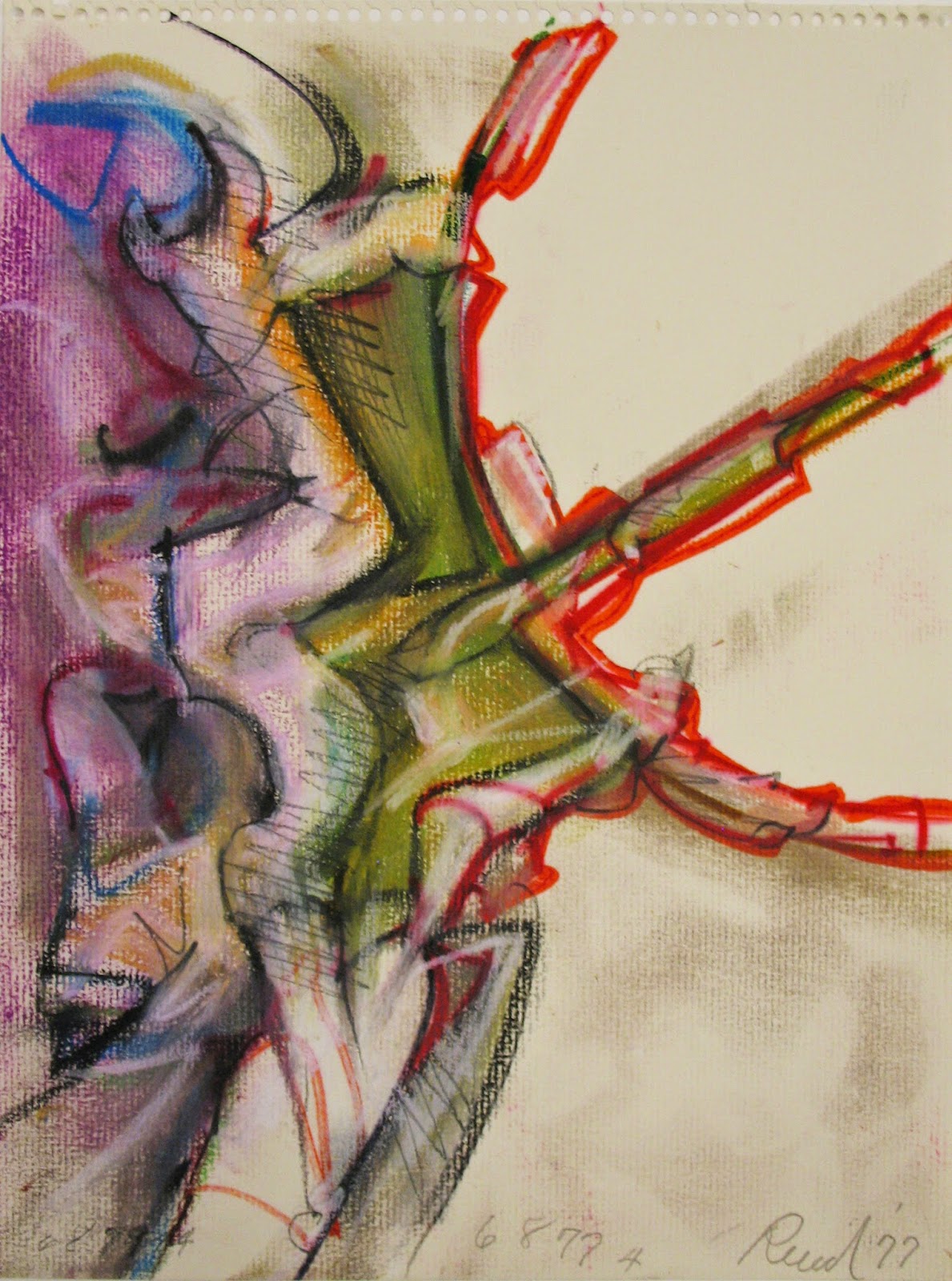
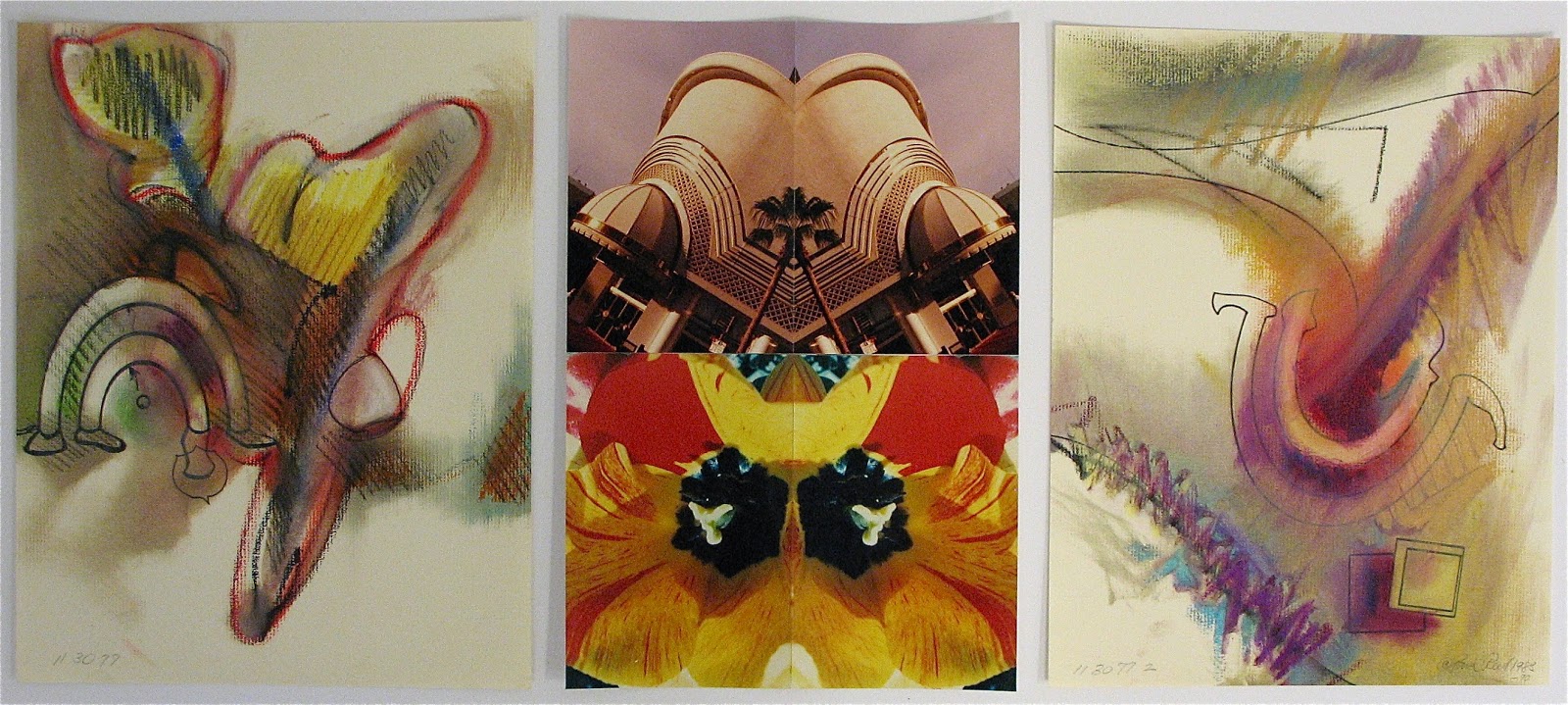
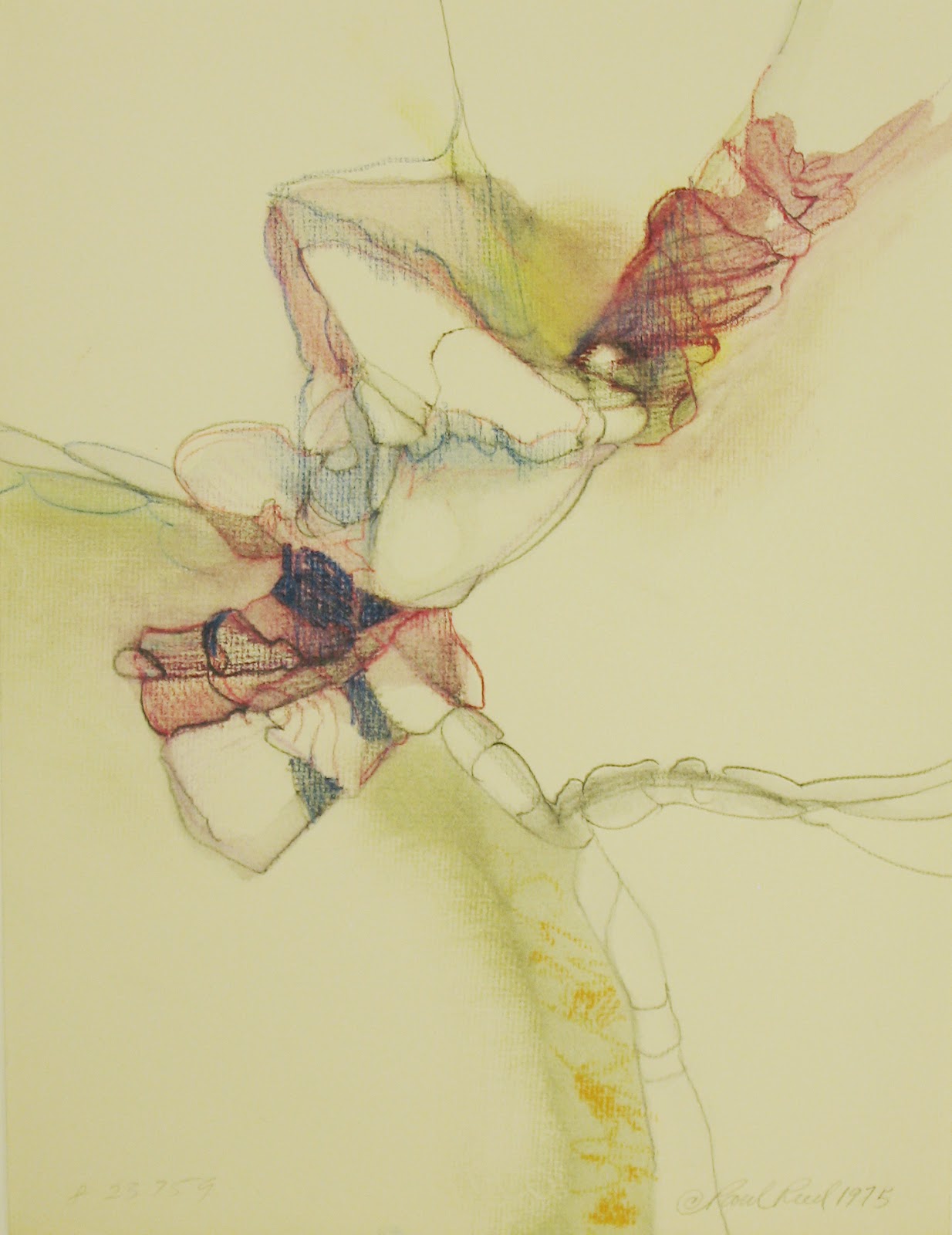
Reed would in the next five decades also create metal sculpture and photographic collages in which two seemingly unrelated photos and their mirror images were joined. He would make pastel drawings and shaped canvases, some of them directly nailed to the wall. He also produced gouache paintings done on plexiglass and transferred to paper. In the 1980s and 1990s, he did “stone portraits,” simply appropriating from nature stones that reminded him of sculptures by Rodin, Giacometti or Boccioni and putting them on pedestals. 

By then, Reed was already part of art history. In the 1960s, he was integral to Washington Color Field painting. The color field painters included Kenneth Noland and Morris Louis, who in the early 1950s had picked up the staining technique when visiting Helen Frankenthaler. Reed, Noland and Morris, plus Gene Davis, Howard Mehring and Tom Downing, were the artists in “The Washington Color Painters,” and exhibition that traveled the country in 1965-66. The show marked the development in Washington, D.C., of a cooler, post-painterly, frequently hard-edged abstraction that stood in contrast to the more gestured, individualistic approach of many Abstract Expressionists. 

Reed was represented in the mid-1960s show with his geometric, relatively hard-edged “Disc” paintings. The paintings on unprimed canvas all had a circle in the center of the rectangular canvas and two triangles in opposite corners. Within this format, Reed would vary the colors of the individual fields to great visual and spatial effect, not unlike Josef Albers in his square paintings. 

But, as Claudine Humblet wrote in her recent three-volume book Nouvelle Abstraction Américaine 1950 –1970, Reed “approached the abstract adventure with individuality, without deliberately subscribing to the grip of a single dogma or giving in to the attraction of a single infatuation.” He would follow the Disc paintings with his Upstart series, such as the 1965 paintings Upstart 18F, #18L and #18R. By painting bands of colors that simultaneously overlay and sat next to each other, Reed explored color effects within a context of expressionism and geometry. 

Reed does so again in recent work such as GIJ and GMK, albeit in different forms. The equal attention to color, space and shape that Legrace G. Benson noted in a 1969 review in Art International remains, as does the spatial illusion created by layers of thin transparent glazes. Reed enhances the spatial effects nowadays by adding strips of thicker paint that form diagonally placed “platforms,” creating paintings that are reminiscent of some of his 1950s Abstract Expressionist work. The thick-and-thin contrast adds another dimension to what Benson called Reed’s “ambivalent spaces.”